

Detection rules
One sentence of detection intent → a deployable scheduled saved search; deploy, enable, edit in place; an ATT&CK coverage heatmap for gaps. Licensed; the engine ships sealed.
Generate
Enter the intent ("detect more than 20 failed SSH logins from one source IP within 5 minutes"), pick index / sourcetype, click "Generate rule". The agentic engine reads real field names first, writes the SPL and dry-runs it; about 19 s on the 1.9.0 test box.
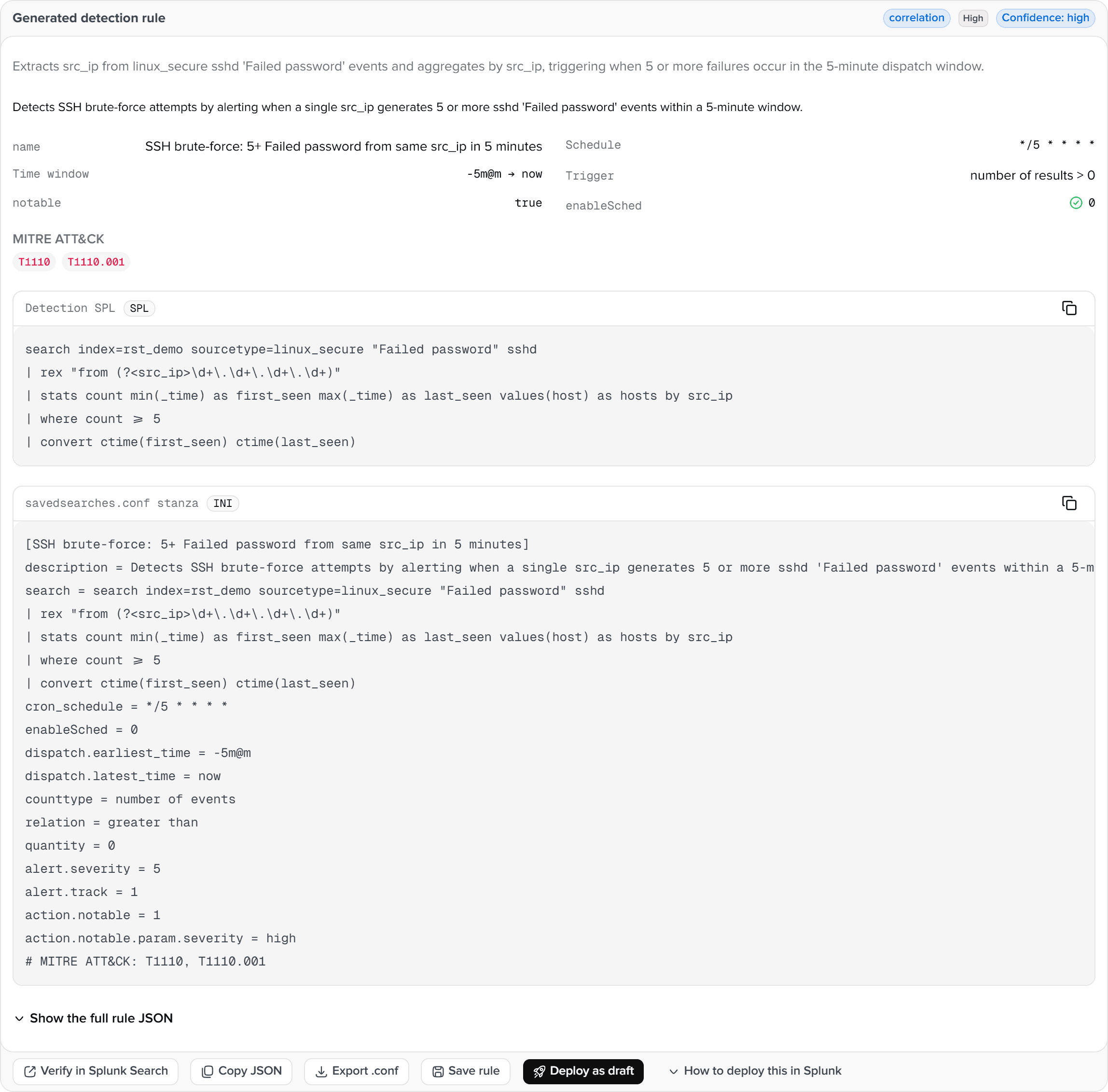
The result card:
| Block | Content |
|---|---|
| SPL | The rule search, editable |
| Schedule | cron, time window, trigger (row count / threshold), severity, whether to create a notable |
| MITRE | Technique ids and names from the bundled ATT&CK table |
| stanza | The complete savedsearches.conf section, copyable |
| Type | scheduled_search / correlation (ES correlation-search form) / auto |
"Export" downloads <name>.savedsearches.conf. Three example cards cover common intents and fill the form on click.
The rule engine is a sealed paid feature: bin/detection_core.sealed is ciphertext and its key arrives with the enterprise licence's heartbeat, bound to this host's fingerprint. No licence, a licence without the feature, or an offline licence signed without the key all return feature_sealed.
Deploy
"Deploy as draft" (admin) writes the rule as a disabled saved search in the search app. The "Deployed rules" list below offers:
- enable / pause
- inline edits to SPL, severity, cron
- delete
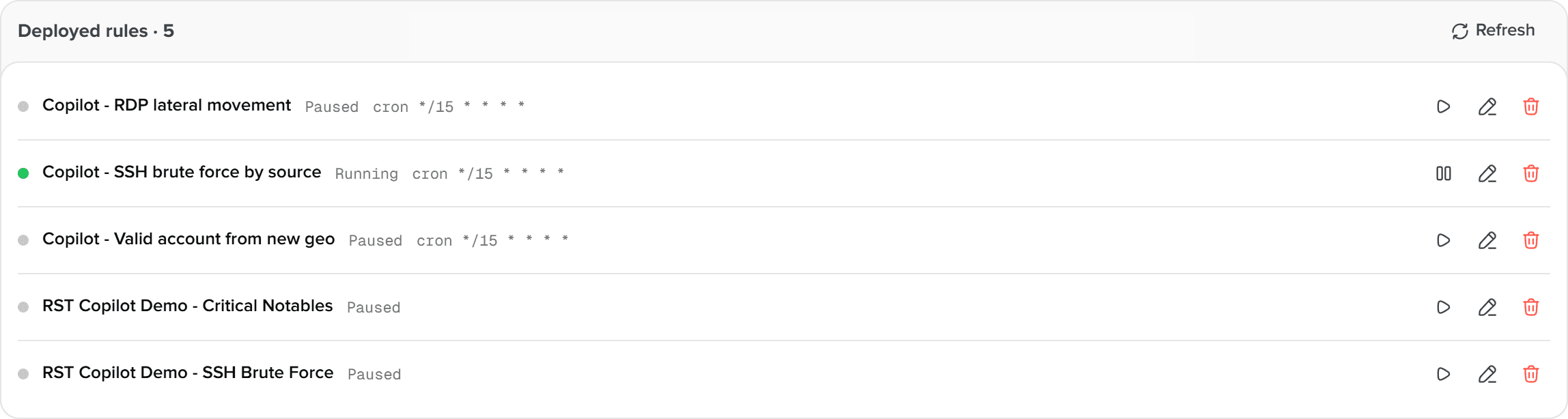
The keys written match the stanza (cron_schedule, alert.severity, alert.track, action.notable…). A rejection by Splunk (a Free licence refuses alert.severity) comes back as deploy_rejected with Splunk's own message.
ATT&CK coverage
The second tab lays deployed rules over the ATT&CK Enterprise matrix (a bundled compact table: 14 tactics × 222 techniques + 475 sub-techniques, August 2026 snapshot, updated with the package).
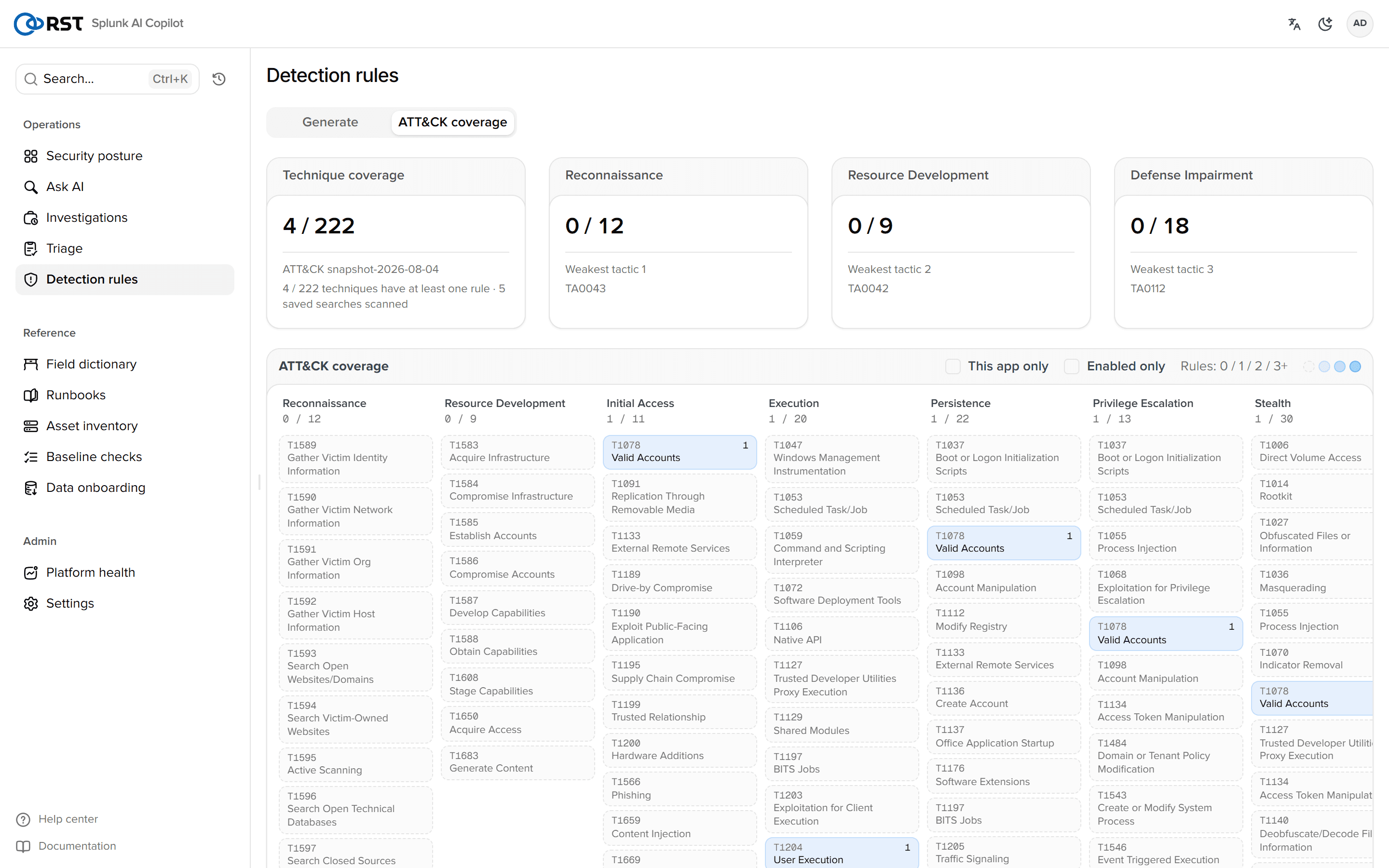
Coverage comes from three places: rules deployed by this app (MITRE field), ES correlation searches (mitre_attack in action.correlationsearch.annotations), and a T1234 regex over other apps' saved-search descriptions as a fallback. Sub-techniques fold into their parent cell; a rule spanning several tactics counts once.
- Cell colour = number of rules (0 blank, 1 / 2 / 3+ darker); hover lists rule names and enabled state.
- Header: covered techniques / total, the three weakest tactics.
- Filters: this app's rules only, enabled only.
- Click an empty cell → back to the Generate tab with the intent pre-filled ("Detect T1059 Command and Scripting Interpreter: …"); generate, deploy, and the heatmap updates.
Handed over from elsewhere
"Turn into a detection rule" in the investigation dialog brings that alert's rule name, fields and conditions here; Alerts and Investigations have the same entry.
Triage
Cluster, score and rank a batch of alerts with one actionable recommendation per cluster; dispositions follow the user across devices; per-rule false-positive rates drive noise-reduction suggestions. Licensed.
Field dictionary
Drill index → sourcetype → field with coverage, type and sample values, read live from Splunk metadata.